For kids & families

Hinduism, explained for kids

Namaste! A temple can feel very big — lots of bells, lamps, songs and shoes by the door. This page explains what all of it means, in plain words.

You do not have to remember everything. Pick one thing you like, and ask a grown-up or a priest about it the next time you visit.

Children and families in the prayer hall of the Hindu Temple of Central Illinois

Six big ideas

The whole thing, in six ideas

Tap a card to read a little more.

A guide to our temple

Walk through the temple in pictures

These are real photos of our temple in Peoria. Start outside, then follow the stops in order — the same way you would walk it on a visit.

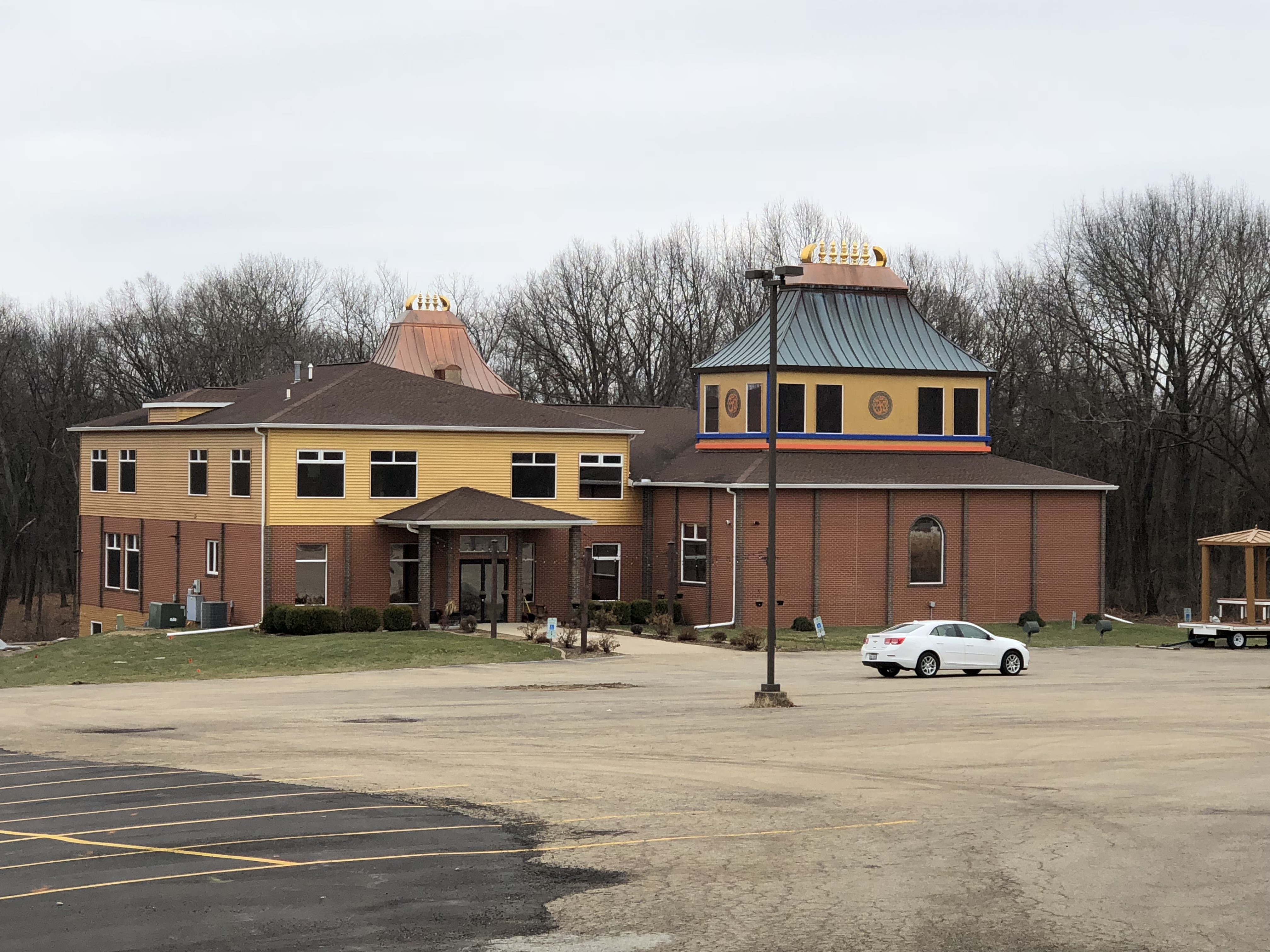
  1. Our temple on the hill in Peoria, with its tall pointed towers. Each tower sits above a deity inside.

    1. Outside the front door

    Our temple on the hill in Peoria, with its tall pointed towers. Each tower sits above a deity inside.

    Try this: Look up and count the towers before you go in. Then take off your shoes at the door.

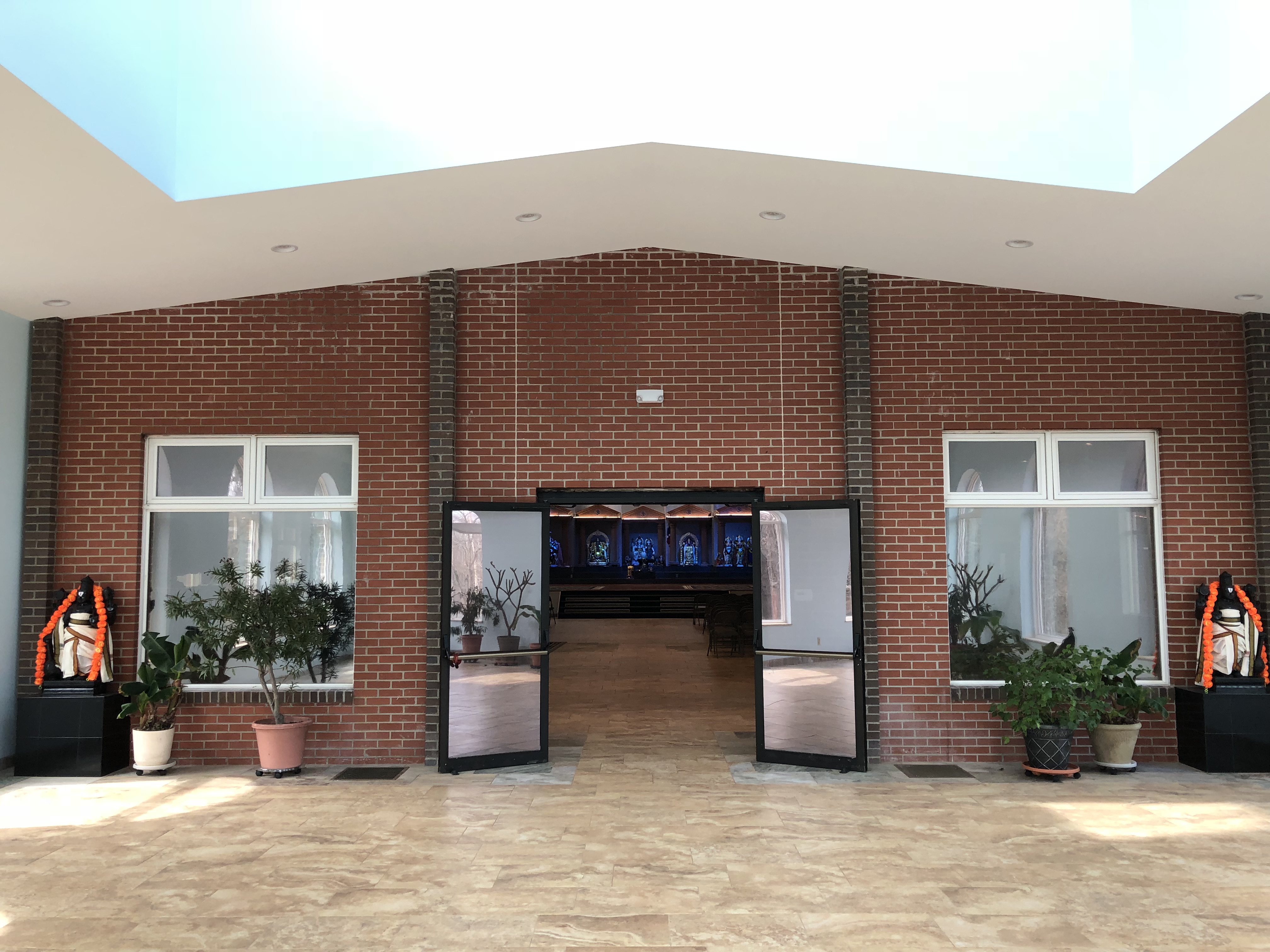
  2. The doorway that leads into the big hall. It is quiet here, and a little cooler.

    2. Just inside

    The doorway that leads into the big hall. It is quiet here, and a little cooler.

    Try this: Put your palms together and say Namaste. Walk, don't run — this is a calm place.

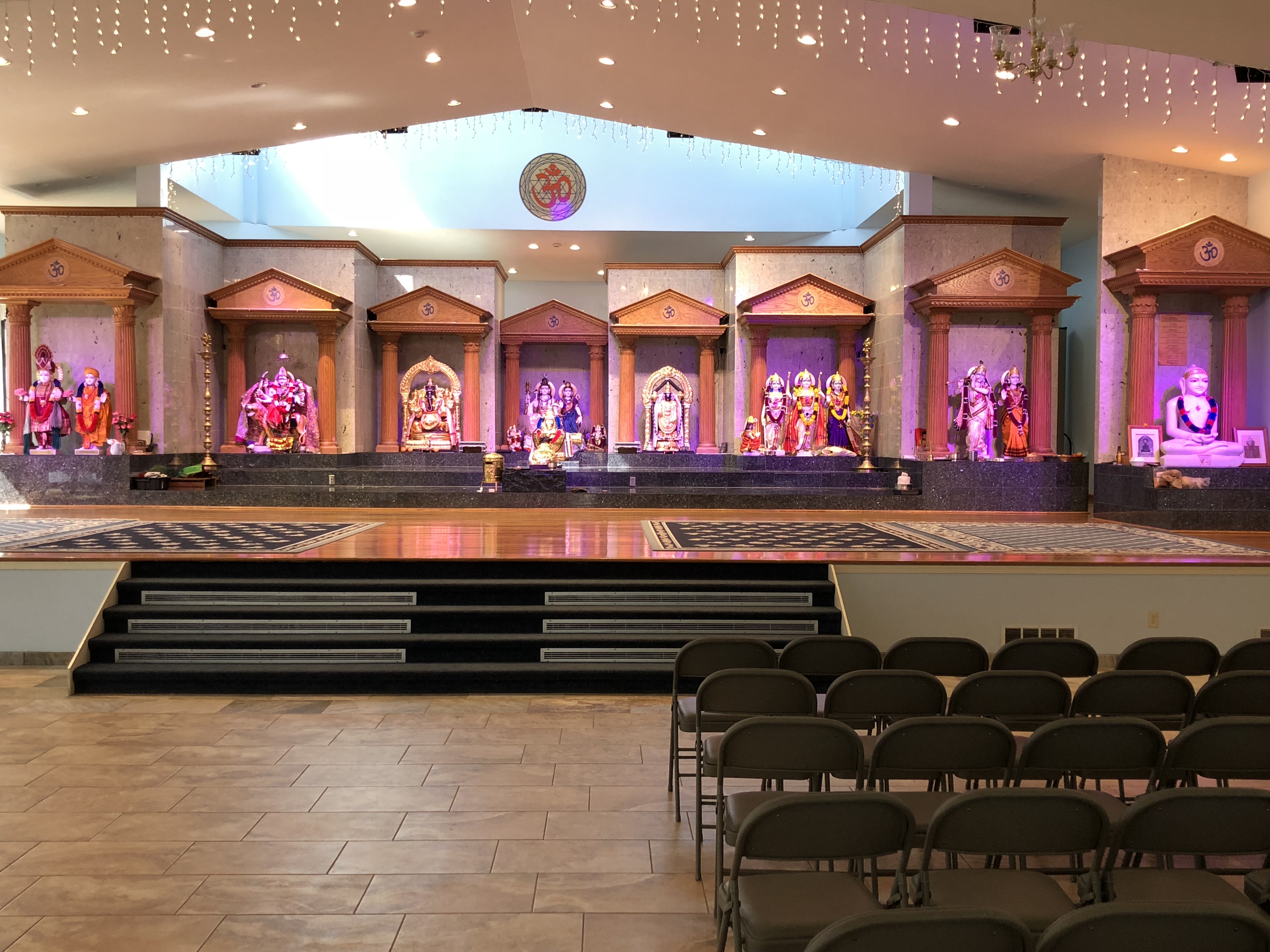
  3. The open hall where everyone sits on the floor for pooja, music and talks.

    3. The big hall

    The open hall where everyone sits on the floor for pooja, music and talks.

    Try this: Find a spot on the floor. If a priest is chanting, listen for words you know, like Om.

  4. The row of shrines. Each deity has their own little home, with a lamp burning in front.

    4. The sanctum

    The row of shrines. Each deity has their own little home, with a lamp burning in front.

    Try this: Walk slowly from one shrine to the next, left to right, and say hello to each one.

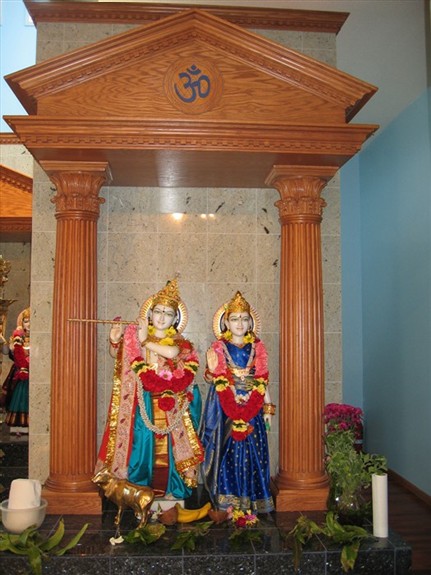
  5. Krishna with his flute, standing beside Radha, dressed in fresh silks and flowers.

    5. Krishna and Radha

    Krishna with his flute, standing beside Radha, dressed in fresh silks and flowers.

    Try this: Look for the flute in his hands. Volunteers change these clothes and flowers often.

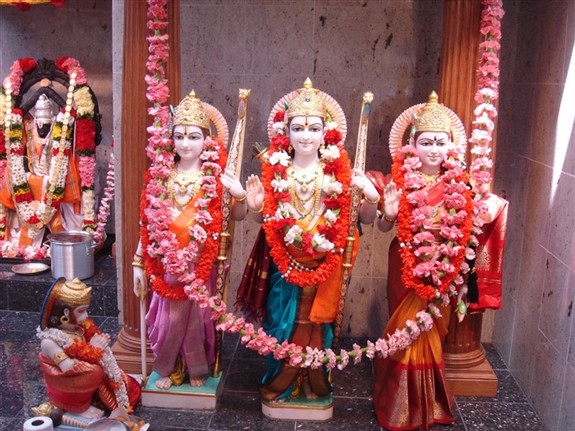
  6. Rama, Sita, Lakshmana and Hanuman standing together — a whole story in one shrine.

    6. Rama's family

    Rama, Sita, Lakshmana and Hanuman standing together — a whole story in one shrine.

    Try this: See who is smallest? That is Hanuman, kneeling. Ask a grown-up to tell you why.

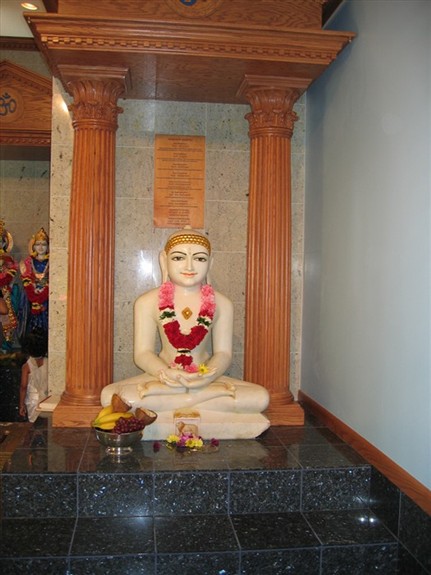
  7. The Jain teacher Mahavir, seated and completely still, sharing our temple.

    7. Lord Mahavir

    The Jain teacher Mahavir, seated and completely still, sharing our temple.

    Try this: Sit as still as he is for ten seconds. That stillness is what he taught.

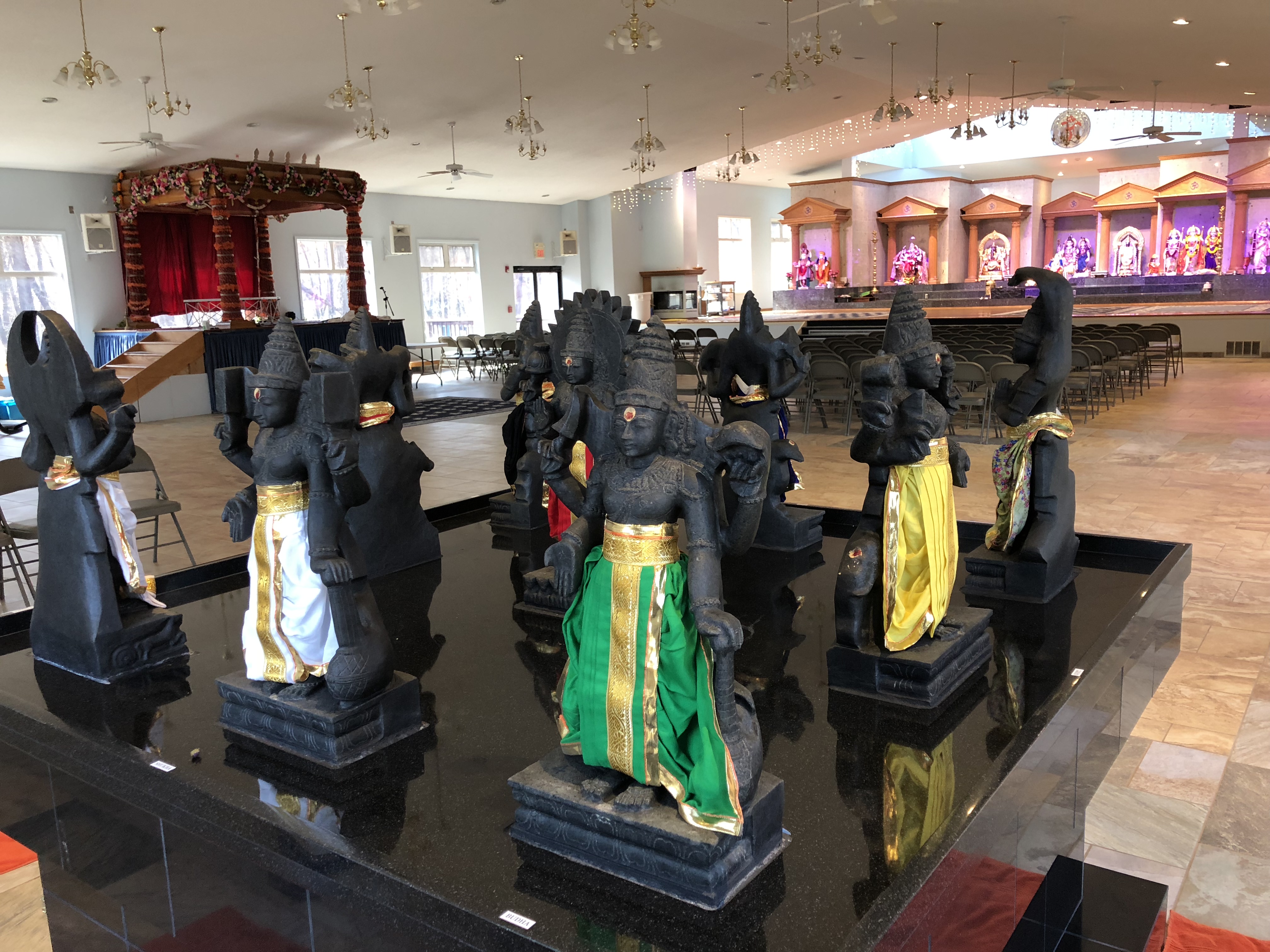
  8. Smaller Utsava Moorthis. These are the ones carried outside during festivals.

    8. The travelling deities

    Smaller Utsava Moorthis. These are the ones carried outside during festivals.

    Try this: Come back at Brahmothsavam in October and watch them ride in the procession.

Plan a family visit

Who lives in our sanctum

Meet the deities you will see here

Hindus say God is one light shining through many forms. These are the forms in our temple.

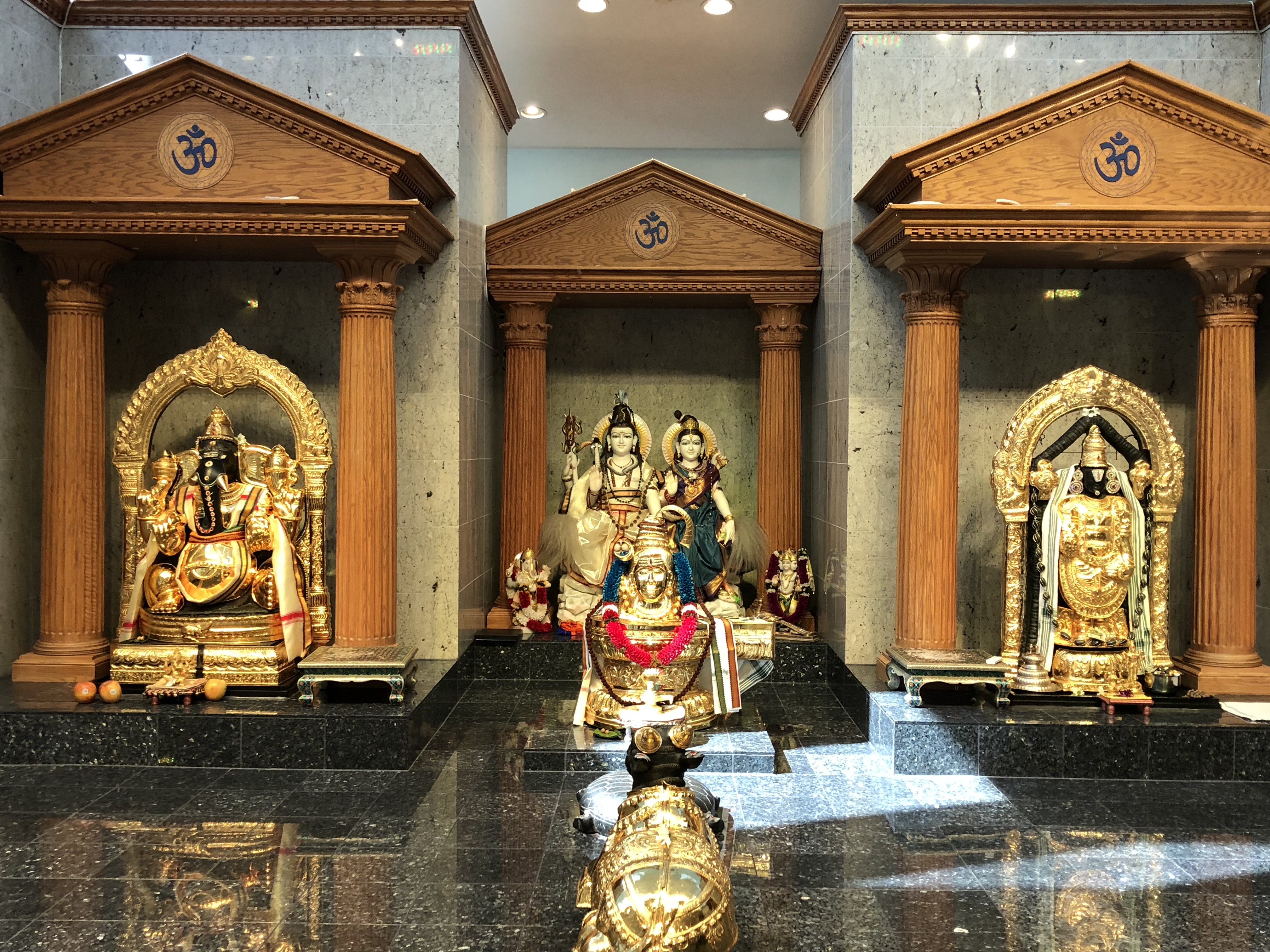
Lord Vigneshwara

also called Ganesha, Vinayaka

The elephant-headed helper who clears problems out of the way.

Families say a prayer to Ganesha before starting anything new — a school year, a trip, even a new notebook. He loves sweets called laddu, and his little mouse friend goes everywhere with him.

Ramparivar

Ramparivar

also called Rama, Sita, Lakshmana, Hanuman

Rama's family — the story of keeping your promises.

Rama gave up a kingdom rather than break his word. Hanuman, the strong monkey helper, crossed an ocean to help him. Their story, the Ramayana, is why lamps are lit at Diwali.

Shivaparivar & Shivalinga

also called Shiva, Parvati

Shiva's family. Shiva teaches calm, and change.

Shiva sits still and quiet in the mountains, and also dances the whole universe along. The smooth stone Shivalinga is bathed with milk and water — that pouring is called abhisheka.

Radhakrishna

Radhakrishna

also called Krishna and Radha

Krishna the flute player, full of music and mischief.

As a baby he stole butter; as a friend he gave the world the Bhagavad Gita, a talk about being brave and doing your duty. Radha's love for him is a picture of loving God with your whole heart.

Durgadevi

The brave mother goddess who rides a lion.

When nobody else could stop a great trouble, Durga did. During Navaratri — nine nights of dancing and singing — families celebrate her courage.

Lord Venkateshwara

also called Balaji

A much-loved form of Vishnu, the protector.

Vishnu comes back again and again whenever the world needs help — as a fish, a turtle, Rama, Krishna. Venkateshwara stands still and steady, welcoming everyone who comes.

Mahalakshmidevi

The goddess of good things: food, kindness and plenty.

She sits on a lotus, the flower that grows clean and bright out of muddy water. At Diwali, homes are cleaned and lamps are lit to welcome her.

Lord Swaminarayana

A teacher who taught service, honesty and simple living.

Followers of Swaminarayan are known for helping people — cooking, cleaning and serving at temples, exactly the way volunteers keep this temple running.

Lord Mahavir

Lord Mahavir

The great Jain teacher of never harming anyone.

Mahavir taught ahimsa so carefully that his followers watch every step so as not to hurt even a tiny insect. He shares our temple, because kindness belongs to everyone.

Festivals

The fun days on the temple calendar

September

Ganesha Festival

Ganesha's birthday. At our temple the Ganeshas are made from clay and return to clay.

Kids can: Help shape a clay Ganesha, sing along at the Samoohika Vinayaka Pooja, and eat a Ganesha laddu.

October

Navaratri & Brahmothsavam

Nine nights for the goddess, and the temple's biggest yearly celebration.

Kids can: Dance, watch the procession, and eat with everyone in the hall.

Autumn

Diwali

The festival of lights — Rama coming home, and light winning over dark.

Kids can: Light lamps, wear new clothes, share sweets, and say sorry to anyone you fought with.

Spring

Holi

Spring, colors, and forgiving each other.

Kids can: Throw colored powder, laugh a lot, and start fresh.

Late winter

Maha Shivaratri

A night of staying up to sing for Shiva.

Kids can: Watch the abhisheka — milk, water and honey poured over the Shivalinga.

Spring / summer

Rama Navami & Krishna Janmashtami

The birthdays of Rama and Krishna.

Kids can: Hear the stories, rock the baby Krishna's cradle, and share prasadam.

See the full temple calendar

Temple manners

What to do when you walk in

Shoes off at the door

Leave them on the shelf. Socks are fine — the floor gets chilly.

Inside voices

People are praying. Whisper, walk slowly, and no running in the hall.

How to greet the deity

Stand in front, put your palms together, and say a quiet thank-you or wish.

About the bell

The bell wakes everyone up to pay attention. Ring it once, gently, if a grown-up says it's okay.

The aarti flame

When the lamp comes to you, hold your palms over the warmth and touch your head.

Prasadam

Take it with your right hand, and finish it — it is blessed food, not a snack to drop.

Ask before photos

Some places in the temple are not for pictures. Just ask first.

Help if you can

Kids can hand out plates, tidy shoes or set flowers. That is seva.

Word list

Temple words, and how to say them

  • Namaste

    say: nuh-MUS-tay

    Hello, with respect — palms together.

  • Murti / Moorthi

    say: MOOR-tee

    The sacred form of a deity in the temple.

  • Darshan

    say: DUR-shun

    Standing before the deity and seeing, and being seen.

  • Pooja

    say: POO-ja

    A prayer ceremony with lamps, flowers and songs.

  • Aarti

    say: AAR-tee

    Waving a lamp in circles at the end of a pooja.

  • Prasadam

    say: pruh-SAA-dum

    Blessed food shared with everyone after prayers.

  • Abhisheka

    say: uh-bhi-SHAY-ka

    Bathing the deity with milk, water and honey.

  • Mandir

    say: MUN-deer

    Temple — a house for God.

  • Bhajan

    say: BUH-jun

    A song sung to God, usually together.

  • Om

    say: aum

    The oldest sound — hummed at the start of prayers.

  • Guru

    say: GOO-roo

    A teacher who shows you the way.

  • Seva

    say: SAY-va

    Helping out without wanting anything back.

Quiz

Five questions — how many can you get?

You got 0 of 5 right so far.

  1. 1. What does Namaste mean?

  2. 2. Which deity is asked first before starting something new?

  3. 3. Prasadam is…

  4. 4. Karma is most like…

  5. 5. Ahimsa means…

Try at home

Six things to try this month

  • Make a tiny altar on a shelf: one picture, one lamp, one flower.
  • Learn one bhajan and sing it with your family on Friday evening.
  • Try one whole day of ahimsa — no unkind words, not even joking ones.
  • Shape a small Ganesha out of clay before the September festival.
  • Ask a grandparent to tell you their favorite story from the Ramayana.
  • Draw your own rangoli in chalk on the driveway before Diwali.

Grown-ups: bring the kids along

Children are welcome at every program. Families can visit for darshan on weekends, join a festival, or help out together — the temple is run entirely by volunteers, and kids make wonderful helpers.