About the temple
The story of Little Gods building a Temple
Respectfully submitted by Prakash Babu for the Temple's Board of Volunteers.
Hindu Temple of Central Illinois (HTCI) is a registered 501(c)(3) organization serving the Greater Peoria area. Founded on March 15, 1994, the temple serves over 1000 families with weekly programming and regular operating hours.
How it began
Many visitors to the Hindu Temple of Central Illinois (HTCI, formerly known as Hindu Heritage Center) wonder why a Hindu Temple was built here, and ask to hear the story behind the creation of such a landmark in Central Illinois.
The story takes us back to the early 90s, when the community was very small and the concept of building a Temple got started. Many Hindu families in the area got together at each other's homes to pray starting in the late 80s. With so many churches in the area, the families longed to have a Hindu home of worship. Thus began the quest for building a Temple.
Temples in North America at the time were predominantly in large metropolitan cities like Pittsburgh, Chicago and New York. The general feeling was that smaller communities like Peoria could not afford a Temple of their own. A group of us decided to beat the odds and embark on the journey.
Milestones
From 1994 to today
1994 · March 15
HHC incorporated as a non-profit, religious institution
Hindu families who had gathered in each other's homes since the late 1980s chartered the organization with the State as Hindu Heritage Center, observing major festivals in rented school auditoriums and church halls.
1996 · August 15
Offer made on a 25 acre tract
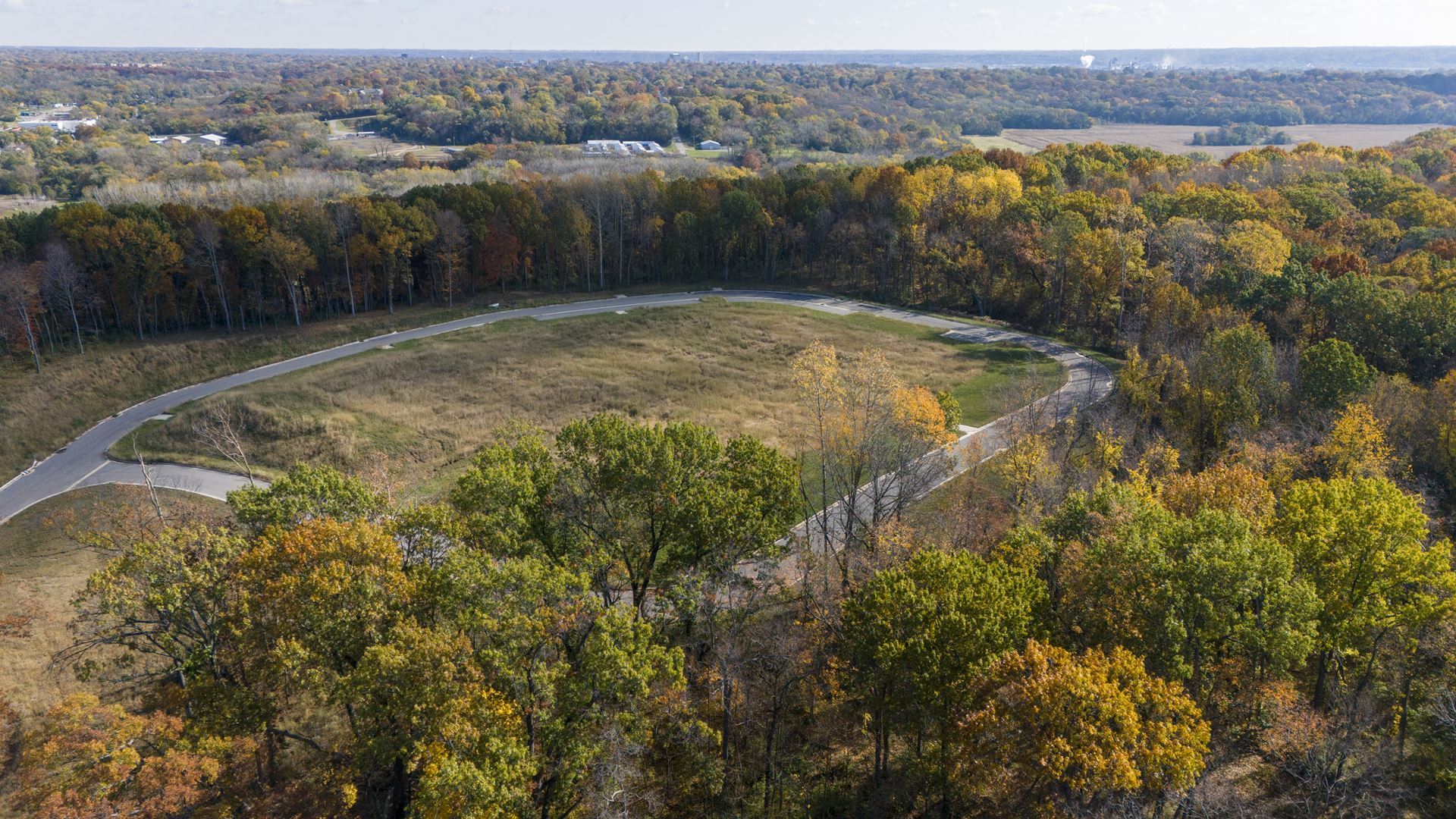
A newspaper ad for a 25 acre wooded tract just outside Peoria at $65K caught the community's attention. The land — a high bluff sloping west to east — was seen as an ideal Vastu location. The request for a special use permit was filed September 9, 1996.
1996 · December 10
Peoria County Board approval
After the Zoning Board denied the permit over neighbors' traffic concerns, the community appealed. The County Board listened to both sides and voted 11 to 7 to approve the special use permit. The 25 acre Prairie Lane land was acquired and the title policy issued April 18, 1997.
1998 · August 27
Groundbreaking ceremonies
With over 400 people attending festivals in rented halls, the plan grew from a $300K facility to one that could seat 600.
1998 · November 11
Construction begins
1999 · November 6
Facility dedication & inauguration of Murthis
2000 · April 29
Grand inauguration of the facility
2001 · November 1
Full approval of the facility by the Zoning board
2002 · July 15
Phase II begins
2003 – 2005
Phase III
August 2003 to May 2005.
2003
Constitutional amendment: HHC becomes HTCI
Counseled that the organization would be misunderstood without "Temple" in its name, the community adopted Hindu Temple of Central Illinois.
2005 · May 27–30
Pranaprathista & Kumbhabhishekam
2006 · June 16–18
The Temple's very first Brahmotsava
2006 · August 25–27
Temple's first three day Ganesha Festival
2006 onward
"Make our God's Home Debt Free" drive launched
Our Moorthis
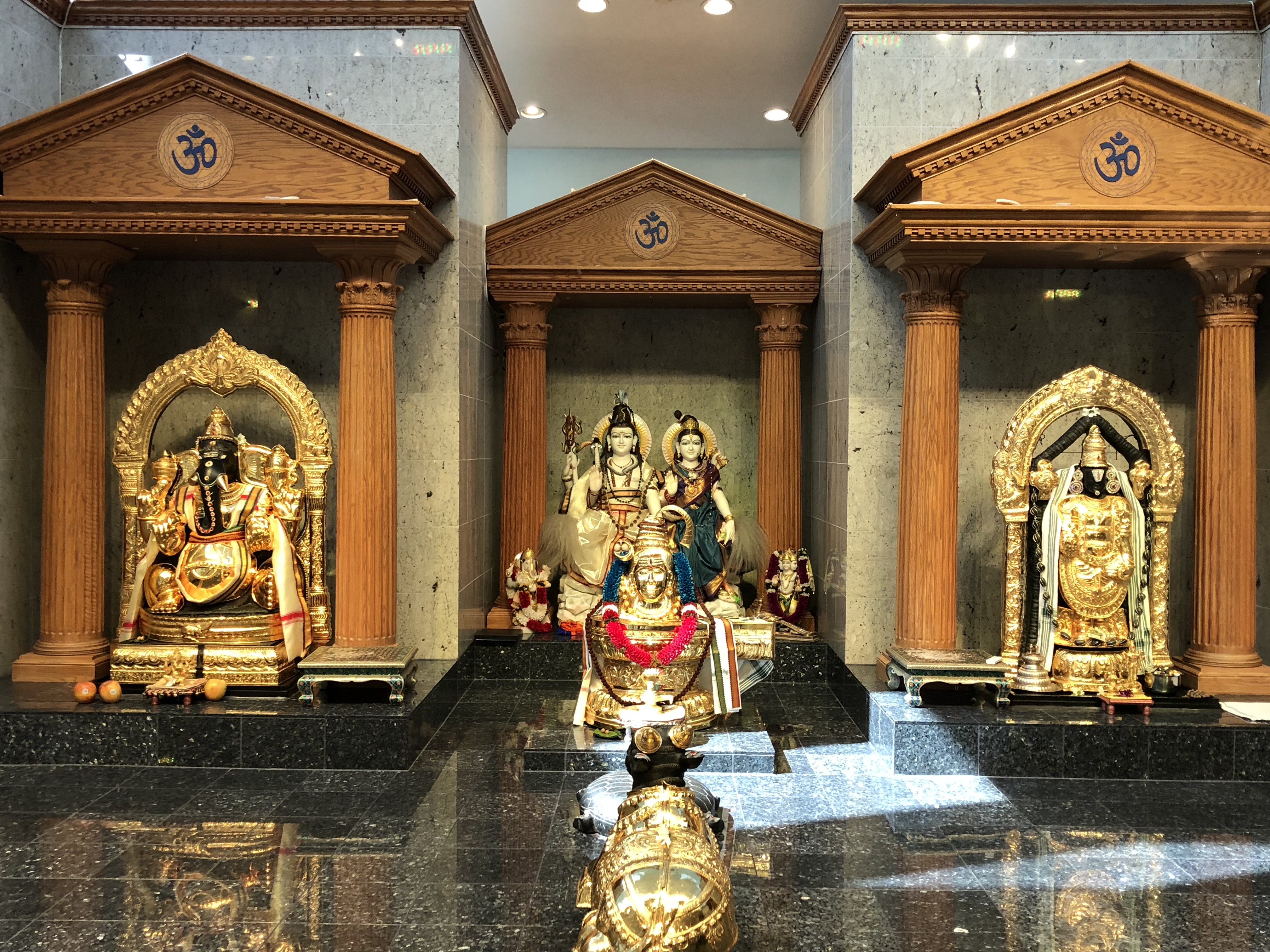
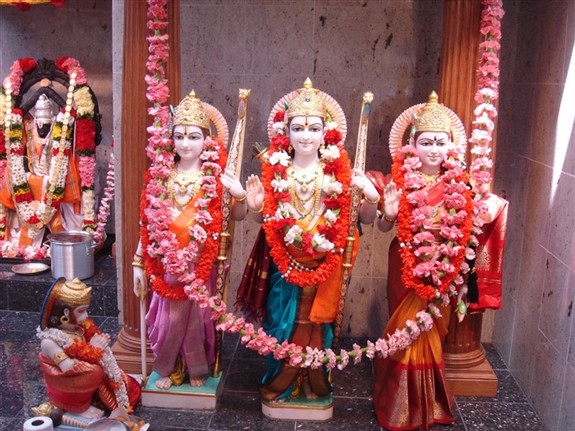
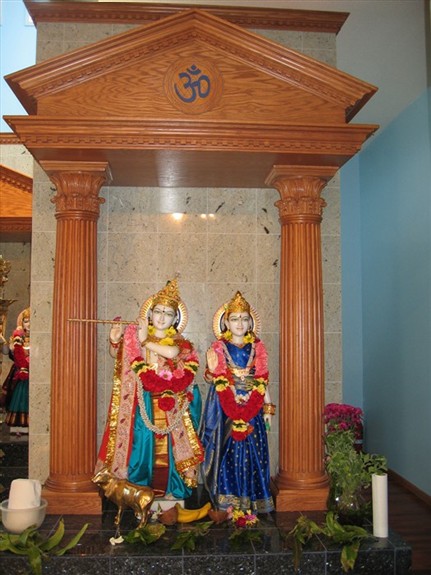
Our sanctum is home to
- ॐLord Vigneshwara
- ॐRamparivar
- ॐShivaparivar
- ॐShivalinga
- ॐRadhakrishna
- ॐDurgadevi
- ॐLord Venkateshwara
- ॐMahalakshmidevi
- ॐLord Swaminarayana
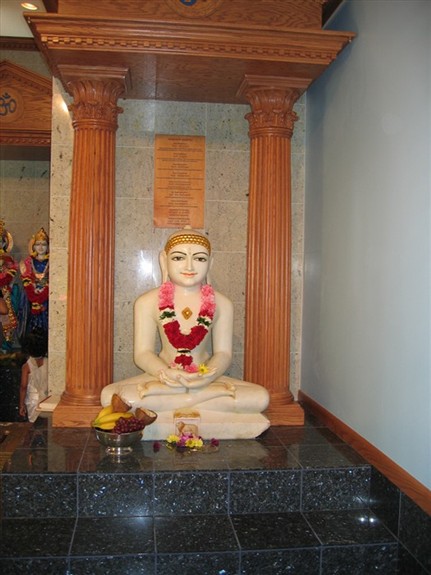
- ॐLord Mahavir
Temple land
The temple’s setting
The Hindu Temple of Central Illinois is situated on a beautiful bluff overlooking Kickapoo Creek and the Peoria stretch of the Illinois River Valley. The temple is bordered to the south by Peoria Park District's Rocky Glen forest preserve.
If you are wondering why such interesting terrain exists in the mostly flat land of Illinois, you may be interested in reading about the Kankakee Torrent and the Bloomington Morainic System.
If you are interested in helping to create and maintain paths, please consider volunteering.
Vision 2020
The temple’s Vision 2020 is coming true
Temple Hill Road
The 3,000 foot (0.6 mile) road with curb, gutter and storm inlets on both sides runs from Kickapoo Creek Road to the Temple parking lot through hilly terrain and ravines. It opened July 15, 2018. A gate at Prairie Lane is now used only for emergencies, returning that neighborhood to pre-temple days as our neighbors wished.
Ring road and parking
A paved ring road now encircles the Temple, Yagashala and parking lot. The L-shaped extension and the larger northern extension are paved, providing parking for 315 cars for special festivals and occasions.
Mahadwara addition with Gopuram
The two story addition is finished with an arched stairwell with limestone cap, integrated with the Yagashala by brick stair steps and sidewalk. The new Gopuram with Om Chakra medallions and gold plated Kalashams complements the Sanctum Gopuram.
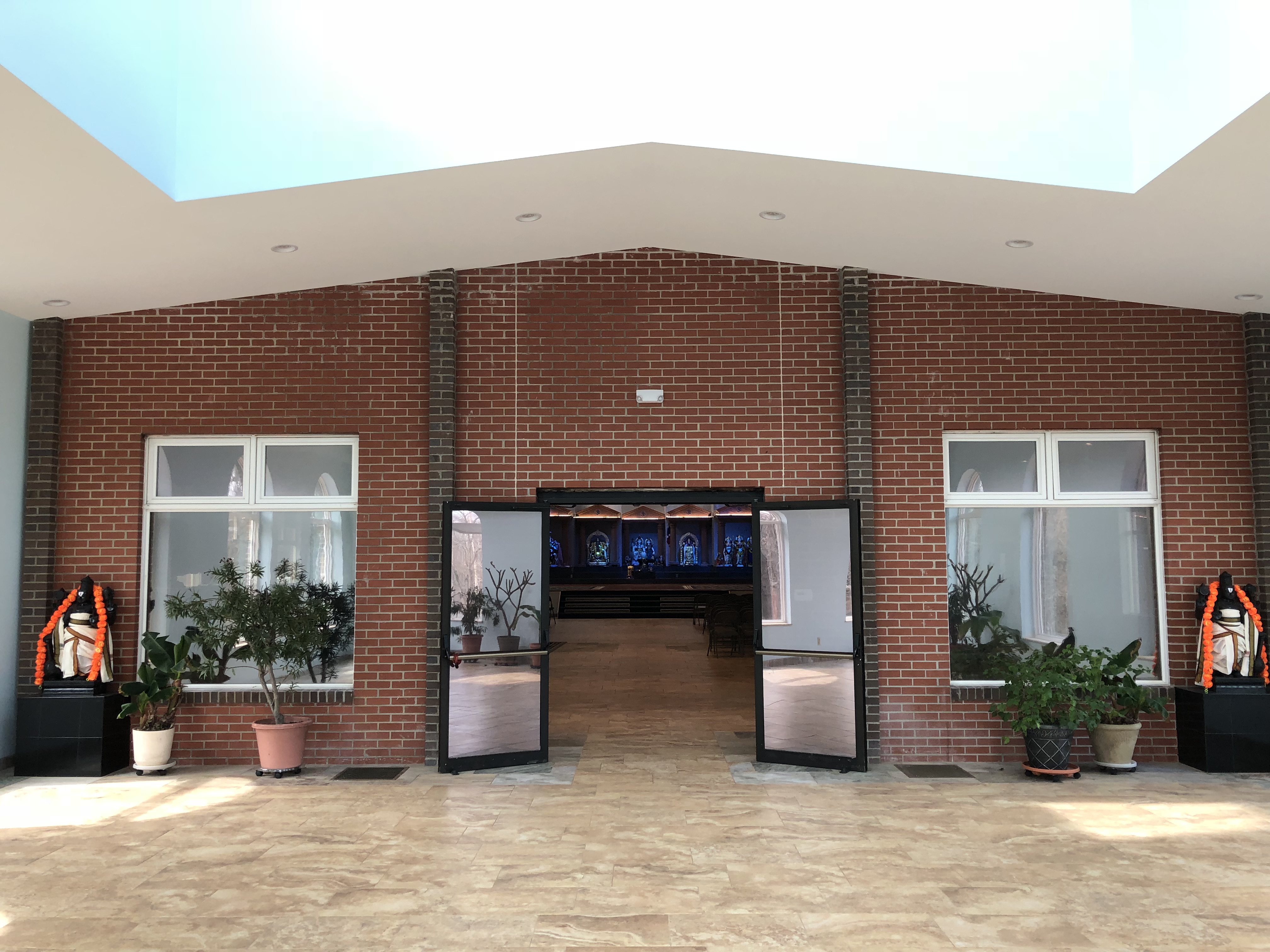
Sanctum expansion into auditorium and entrance hall
The upstairs entrance hall (1,000 sq. ft.) is the home of Jaya and Vijaya and opens into the Sanctum Auditorium, now tiled and home to the Navagraha Devatas, able to host diverse devotee gatherings with a panoramic view of the Temple grounds.
Lower level multi-purpose hall
This 1,000 sq. ft. hall serves as classroom, lecture hall, yoga room and extension of the dining area adjoining the kitchen. Its independent entrance lets it host smaller gatherings for family sacraments.
Improvements to the Yagashala
The Bali Peetam and Dwaja Peetam were re-installed in alignment with the center line of the Temple, drain tile was added, the old retention pond filled, and the Temple's Rath Path now surrounds the Yagashala.
New 8 inch water line
Running from the Farmington Road main, under Kickapoo Creek and Creek Road and along Temple Hill Road, now pressurized and connected to fire hydrants at the Temple and the Prairie Lane entrance — bringing water pressure and fire protection to the whole neighborhood.
New 10 inch sanitary sewer line
A 10 inch sewer trunk line connects to the 72 inch main sewer, running under two railroads, across Kickapoo Creek Road and along Temple Hill Road.
Board of Volunteers
Who serves the temple
Member
Raghu Mailwar
Member
Ashvin Babu
Member
Chandrika Patil
Member
Bhava Sagar
As Board Members, we must always be aware that every decision we make can affect the reputation of our Temple. Integrity is the foundation. We treat one another with the respect, trust and dignity we ourselves expect, we value the differences among individuals and welcome diversity within our community, and we ensure every accounting entry accurately reflects its supporting information. We do not use the Temple facility or activities for personal gain.
Request the Code of Conduct & Constitution